The Ming Dynasty (1368-1644)
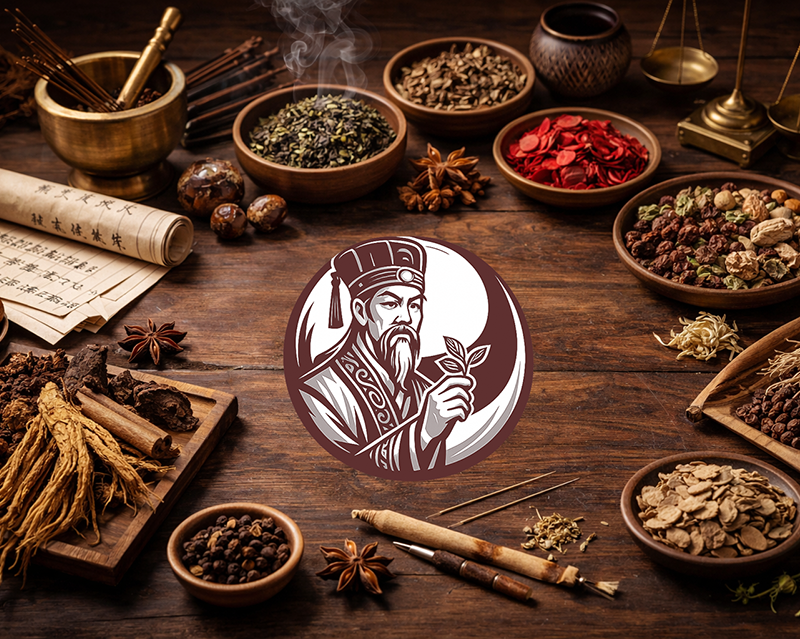
The Ming dynasty: stability, the Forbidden City, and the crown of classical TCM
After the Mongol Yuan dynasty, the Ming dynasty (1368-1644) brought China nearly three centuries of stability, prosperity, and cultural flourishing. Founded by the former peasant and rebel Zhu Yuanzhang — who ruled as the Hongwu Emperor — the Ming dynasty was, in the eyes of historians, "one of the greatest eras of orderly government and social stability in human history." For Traditional Chinese Medicine, the Ming period was the age of great synthesis: the moment when centuries of medical knowledge were brought together in monumental works that definitively codified TCM.
An empire of unprecedented scale and stability
The Ming dynasty ruled over a China whose population nearly tripled during this period — from about 60 million to 160 to 200 million people. An efficient bureaucracy of Confucian-trained officials ensured administrative continuity. Trade and craftsmanship flourished, and China exported porcelain, silk, and tea to every corner of the world. The famous expeditions of Admiral Zheng He (1405-1433) sailed as far as the coast of Africa — proof of the maritime ambition and self-confidence of early Ming China.
After 1421, the Ming emperors resided in the Forbidden City in Beijing — an immense complex of 73 hectares with hundreds of buildings, palaces, and temples, inhabited by thousands of people who formed the imperial court. The later emperors increasingly lived in isolation behind the red walls, far removed from the outside world — a separation that ultimately contributed to the administrative weakening of the dynasty.
Li Shizhen and the Bencao Gangmu
The greatest medical achievement of the Ming period — and perhaps of all Chinese medical history — is the Bencao Gangmu by Li Shizhen (1518-1593). This monumental pharmacological work, on which Li Shizhen labored for nearly thirty years, describes 1892 medicinal substances — plants, minerals, and animal products — along with their properties, applications, preparation methods, and side effects. It is illustrated with more than 1100 drawings and contains nearly 11,000 prescriptions.
The Bencao Gangmu is not only a pharmacological reference work — it is an encyclopedia of the natural world as Ming scholars understood it. It was translated into Japanese shortly after publication and later into European languages, influencing both East Asian and early modern European science. To this day, the Bencao Gangmu remains a fundamental reference work in TCM herbal medicine.
Yang Jizhou and the acupuncture classic
Another major figure of the Ming period is Yang Jizhou (1522-1620), whose work Zhenjiu Dacheng (The Great Compendium of Acupuncture and Moxibustion) codified and systematized the acupuncture tradition. Yang Jizhou integrated the knowledge of earlier generations and added his own clinical experience. His work became the most widely read and cited acupuncture manual in Chinese history and remains a point of reference for acupuncturists worldwide to this day.
Philosophical renewal
In the sixteenth century, a new movement arose within the Confucian intellectual tradition, influenced by Chan Buddhism and Daoism. Thinkers such as Wang Yangming advocated a more intuitive, inwardly directed approach to knowledge and morality. This philosophical renewal also had consequences for medicine: physicians began to place greater emphasis on the individual constitution of the patient and on the role of emotions and spirit in illness and healing.
Conclusion
The Ming dynasty is the era in which TCM completed its classical form. With the Bencao Gangmu and the Zhenjiu Dacheng, humanity possesses two of the greatest medical works ever written. The Ming period is the high point of a development that began more than two thousand years earlier — and that would continue and adapt to new times in the dynasties that followed.