The Tang Dynasty (618-908)
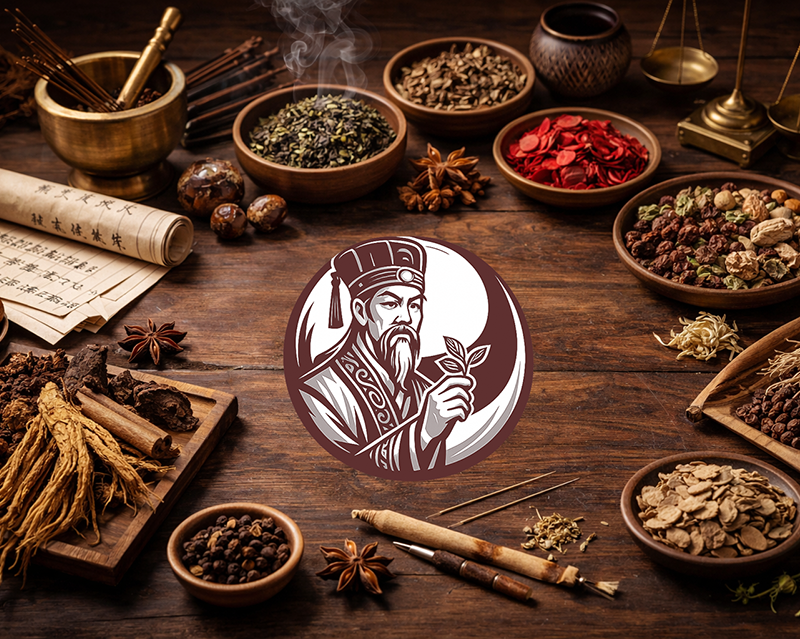
The Tang Dynasty: China's golden age and the flourishing of TCM
The Tang dynasty (618-908) is regarded by historians as one of the absolute high points of Chinese civilization. It was a period of unprecedented openness, cultural richness, and international exchange. China was the center of the world — politically, economically, and culturally. And for Traditional Chinese Medicine, the Tang period was an era of extraordinary productivity: major encyclopedic works were compiled, medical education was formalized, and TCM reached a level of systematization that made centuries of further development possible.
An empire that embraced the world
The Tang dynasty was larger than the Han and extended from Korea to Central Asia. Through the Silk Road, China maintained intensive contacts with India, Persia, the Byzantine Empire, and the Arab world. This openness to foreign influences was not a weakness but a strength: Tang China absorbed the best that other cultures had to offer and transformed it into its own unique synthesis. Buddhism, which had entered China during the Han period, reached its peak during the Tang era — supported by the imperial court and deeply rooted culturally.
Sun Simiao: the Prince of Medicine
The great figure of Tang medicine is Sun Simiao, who lived from about 581 to 682 AD and is regarded by many as the greatest physician in the history of TCM. His two monumental works — the Qianjin Yaofang (Thousand Golden Prescriptions) and the Qianjin Yi Fang (Supplement to the Thousand Golden Prescriptions) — are encyclopedic compilations of medical knowledge that bring together the entire TCM tradition up to his time.
Sun Simiao was also an ethical thinker. His text on medical ethics — "The sincere physician" — emphasizes that a physician must treat all patients equally, regardless of their social status, wealth, or origin. This is one of the earliest formulations of medical ethics in world history. Sun Simiao's legacy therefore extends beyond his medical knowledge: he also defined what it means to be a good physician.
Formalization of medical education
In the Tang period, a formal medical education system was established for the first time. The Imperial Medical Bureau — the Tai Yi Shu — organized medical training into specialized departments: medicine, acupuncture, massage, and incantation rituals. Students followed a structured curriculum and took examinations. This was a revolutionary step: for the first time, medical knowledge was not only passed on informally from master to student, but formalized within an institutional framework.
Empress Wu Zetian: China's only empress
The Tang dynasty saw a remarkable episode: the Second Zhou dynasty (690-705), when Wu Zetian seized power and proclaimed herself emperor — the only woman in the entire imperial history of China to do so. Her rule was controversial but effective. She promoted Buddhism, restructured the bureaucracy, and made merit weigh more heavily than birth in official appointments. After her death, the Tang dynasty was restored.
Conclusion
The Tang dynasty is to TCM what the Renaissance was to European medicine: a period of synthesis, systematization, and flourishing that lifted the tradition to a new level. The works of Sun Simiao, the formalization of medical education, and the international exchange of knowledge made the Tang period an indispensable chapter in the history of Traditional Chinese Medicine.